
In November 2025, global leaders gathered in Belém, Brazil for the COP30 climate summit—the first COP conference held in a rainforest region. Nearly 200 countries jointly committed to keeping global temperature rise within 1.5°C and adopted the “Belém Political Package,” including tripling adaptation funding and launching the Global Implementation Accelerator.
However, climate change is just one of the challenges facing our oceans. Heavy metal and radionuclide pollution is silently threatening marine ecosystems, often overshadowed by the louder climate discourse.
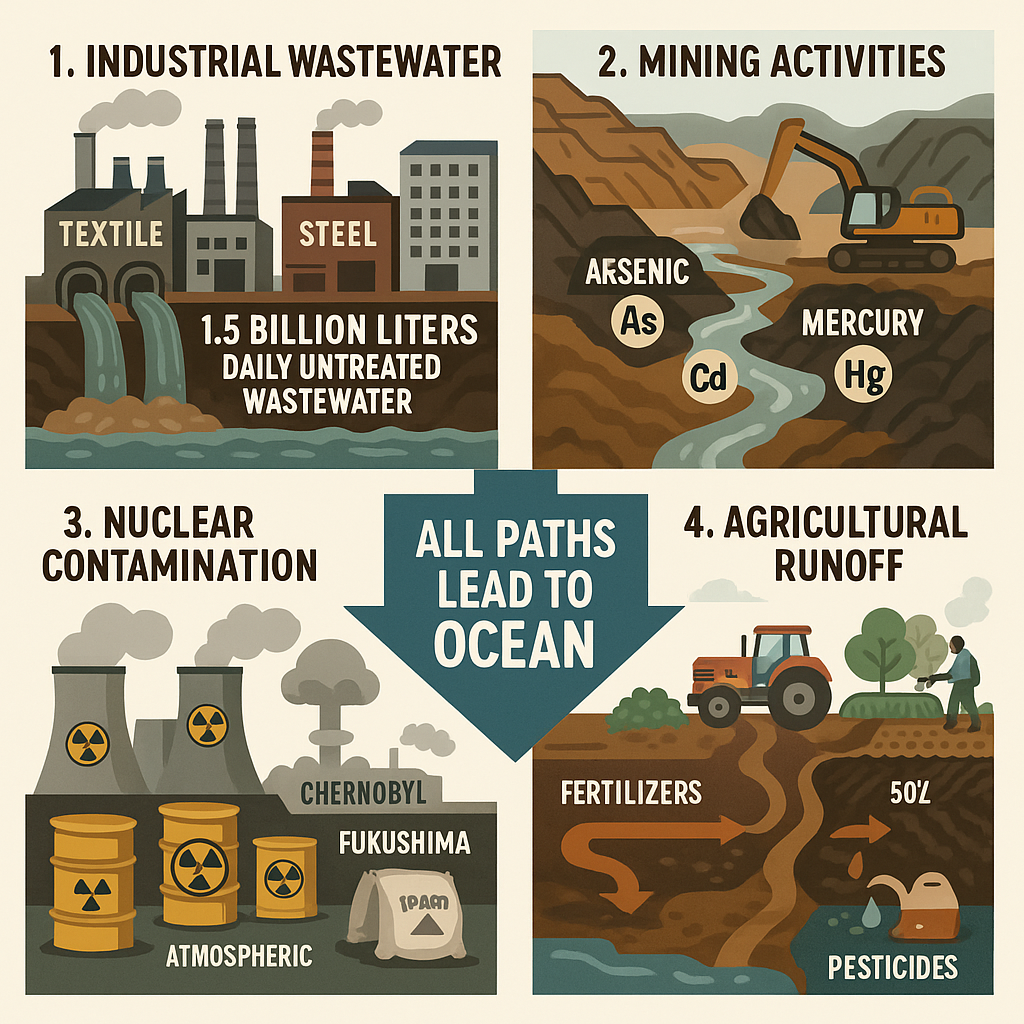
Pollution Sources: The Invisible Crisis
- Industrial Wastewater: Textile, steel, and battery manufacturing industries discharge 1.5 billion liters of untreated wastewater daily
- Mining Activities: Release toxic metals such as arsenic, cadmium, and mercury
- Nuclear Contamination: Atmospheric nuclear tests, Chernobyl and Fukushima accidents, nuclear waste disposal facilities
- Agricultural Runoff: Heavy metals from fertilizers and pesticides enter the ocean via rainwater
Ecological Crisis Under Dual Pressure
Oxygen depletion is exacerbating heavy metal toxicity. When seawater becomes oxygen-depleted, marine organisms need to absorb 2-3 times more heavy metals to survive; ocean acidification weakens biological detoxification capabilities and may even trigger the release of already accumulated toxins back into the ocean. This interaction between climate change and pollution is creating a vicious cycle.
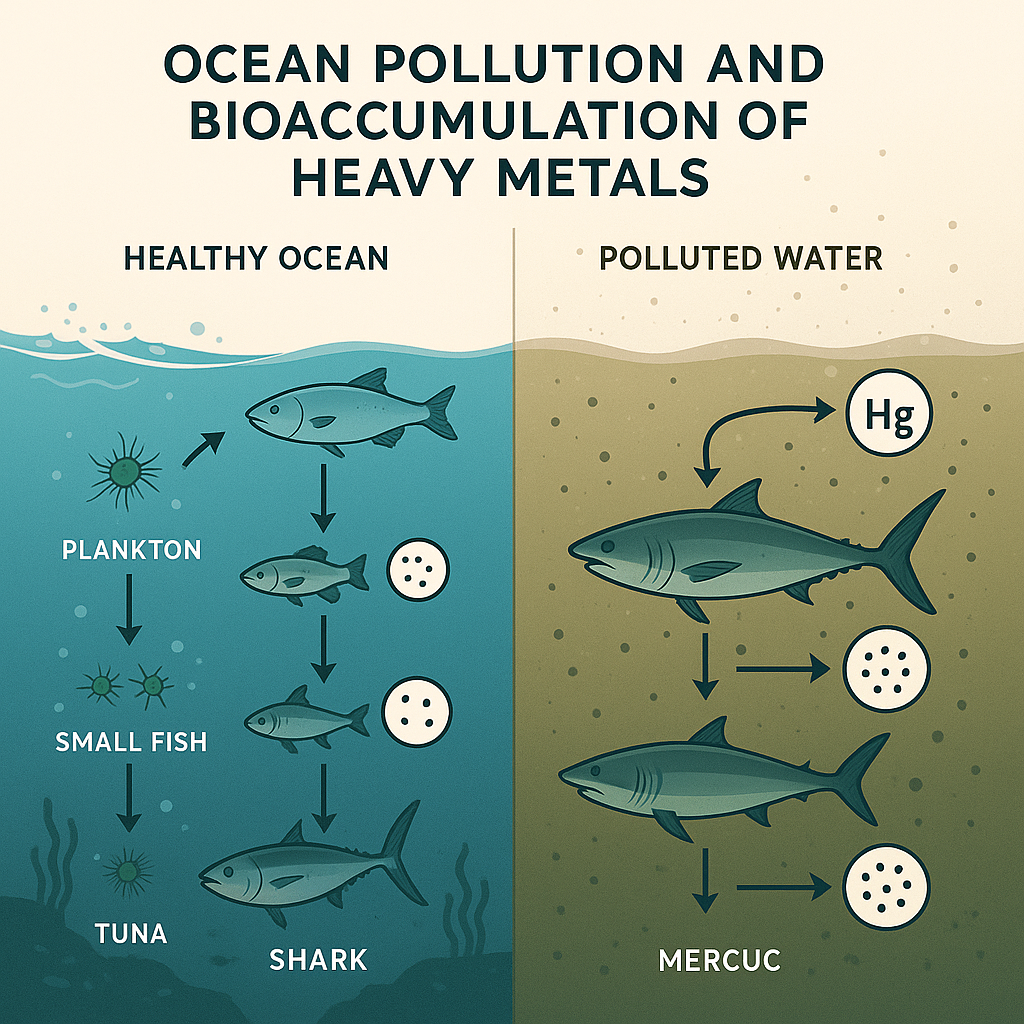
Bioaccumulation Effects:
Heavy metals pass through food chains—from plankton to small fish, large fish, apex predators, shellfish, and crustaceans—concentrating at each level until reaching dangerous levels in top predators. Hundreds of seafood species we consume daily can carry these pollutants into human bodies, threatening the immune and nervous systems.
Ecological Disruption:
Heavy metals pass through food chains, affecting marine life at all levels. From plankton to small fish, large fish, apex predators, shellfish, and crustaceans, these pollutants can enter human bodies through hundreds of seafood species we consume, potentially causing damage to the immune system and nervous system.
Call to Action:
Despite the strong atmosphere of climate action at COP30, we must also view ocean pollution as a “dual threat.” Protecting our oceans requires:
- Strengthening industrial wastewater emission supervision
- Improving wastewater treatment
- Responsible land-use planning
- Enhancing ocean pollution monitoring
- Deepening research on climate-pollution interactions
Only by addressing both climate warming and pollution issues can we truly protect the life-sustaining ecosystem of these magnificent lands.
 English